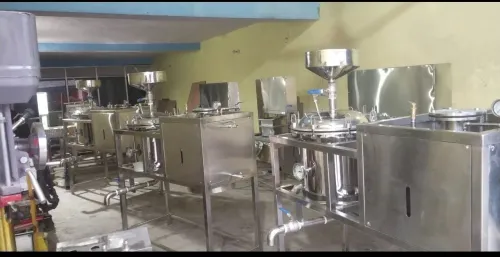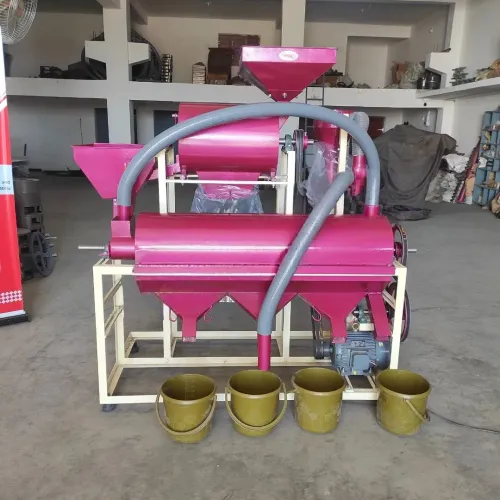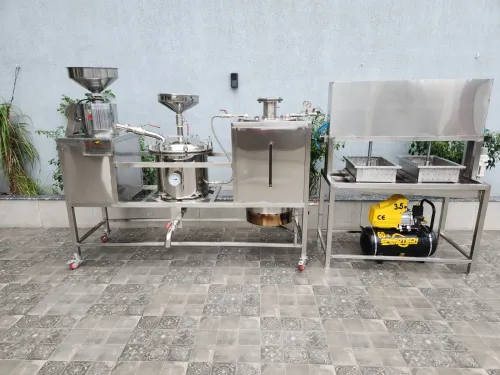


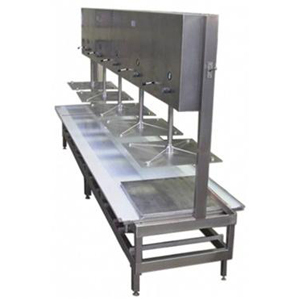
The ingredients for making tofu are few. They include the milk of soybeans, water, and coagulating agents. The modern tofu manufacturing process is largely an automated version of the traditional method, and much of the modern equipment is made in Japan. While an individual tofu maker might work with 20 gallons (76 1) of beans at a time, a contemporary processing facility can produce about 3.5 tons of tofu per day, using 5.7 tons of soybeans.
We Krishna Industries Are The Leading Manufacturer Of Soyabean Milk Plant , Tofu Machine , Tofu Press , Soya Milk Making Machine , Soya Milk Plant , Soyabean Grinder
The first step in making tofu is soaking the soybeans and extracting the milk. A coagulant is added to curd the milk. Traditionally the coagulant used is nigari, which is a sea water precipitate rich in minerals such as magnesium and calcium chlorides. But modern manufacturers use either calcium sulfate or magnesium chloride. The soya curds are then processed into tofu in the desired form, primarily in custard-like blocks. A variety of textures may be produced, depending on the water content. Tofu comes in soft, firm, and extra-fimn, as well as silken or in liquid form. A number of tofu flavors, such as Jalapeno and Cheddar, are also available.
Soaking the beans
1 Dried beans, which come in 60-pound (27 kg) sacks, are soaked in water for 12 to 14 hours. The beans soften as they absorb the water and double in size.
Processing the soybeans
2 After soaking, the beans are mashed with special Japanese stone grinders or other pureeing machines and mixed with water into a slurry. The slurry is boiled to neutralize an enzyme that hinders digestion.
3 The soy milk is extracted with a roller press, separating it from the pulp, which consists of the hull and fiber. This process may take about two hours to complete. The remaining pulp can be used to feed live-stock.
Solidifying the soy milk
4 Once the whey is extracted, the soybean juice is pumped into curding vats. A coagulating agent is mixed in, such as calcium sulfate, magnesium chloride, or nigari. The coagulant alters the pH and curds the milk much like the process for making cottage cheese. This step takes about 20 minutes.
Pressing the tofu
5 Traditionally the curds are pressed with hand-turned screw presses or simple lever presses. The tofu may be pressed in cheesecloth-lined boxes. Modern systems use centrifuges or hydraulic presses. The whey drains off, leaving soft blocks of pressed curds. Tofu can be produced in a variety of textures, from a dense cheese-like texture to a softer or liquid form.
Cutting the tofu
6 Automated cutters slice the cake tofu into one-pound (.45 kg) blocks. The tofu blocks are washed in vats of water where they firm up and are stored until they are ready to be processed further.
Packaging the tofu
7 Tofu may be packaged into shrink-wrapped blocks or continuous thermo-form packages. Water may be added to the packages, or tubs, and then they are sealed, weighed, and dated. Some companies process the soy milk directly in its package.
Pasteurizing the tofu
8 The packaged tofu is pasteurized at about 180°F (82°C). Pasteurization extends the shelf life of tofu to about 30 days. The tofu is then chilled in water until it is ready to be placed into boxes and shipped to distributors. Tofu must be refrigerated at below 45°F (7°C) to keep it fresh.